Here is a number that should change how you think about your website: for every 1,000 Google searches in the United States, only around 360 now result in a click to the open web. The other 640 end right there on the search results page, answered by an AI Overview, a featured snippet, a knowledge panel, or simply abandoned. That is not a projection. That is measured clickstream data from panels tracking millions of real searches, and it represents the single biggest structural shift in how the web works since search engines first appeared.
This is the zero-click search reality, and if you run a website that depends on organic traffic, it is the most important trend you need to understand right now. The good news is that zero-click does not mean zero opportunity. It means the rules of winning have changed, and the webmasters who adapt their strategy to the new rules are still growing. The ones who keep optimizing purely for clicks the way they did in 2020 are the ones watching their traffic quietly disappear. Here is what is happening and what to actually do about it.
A zero-click search is exactly what it sounds like: a user types a query into Google, gets their answer directly on the results page, and never clicks through to any website. Their question is answered, Google keeps the visitor, and the sites that hold that information get nothing in return.
This is not new. SparkToro's research first quantified the phenomenon back in 2019, when roughly half of all Google searches already ended without a click, driven by featured snippets and knowledge panels that had been absorbing clicks for years. What changed between 2024 and 2026 is the acceleration. The arrival and rapid scaling of AI Overviews turned a slow, decade-long structural shift into a sudden structural break. The overall US zero-click rate now sits in the range of 60 to 65 percent of all searches, and the trend line is still climbing rather than leveling off.
Understanding this trend requires separating two forces. The first is mature and well understood: SERP features like knowledge panels have been quietly taking clicks for a decade. The second is the new accelerant: AI Overviews and AI search engines like ChatGPT and Perplexity, which compress years of gradual change into months. The combination is why the rate of change is speeding up, not slowing down.
The headline 60 percent figure actually hides the most important insight. The real story is in how dramatically zero-click behavior varies depending on the search, the device, and the intent behind the query. These distinctions are where your strategy should actually begin.
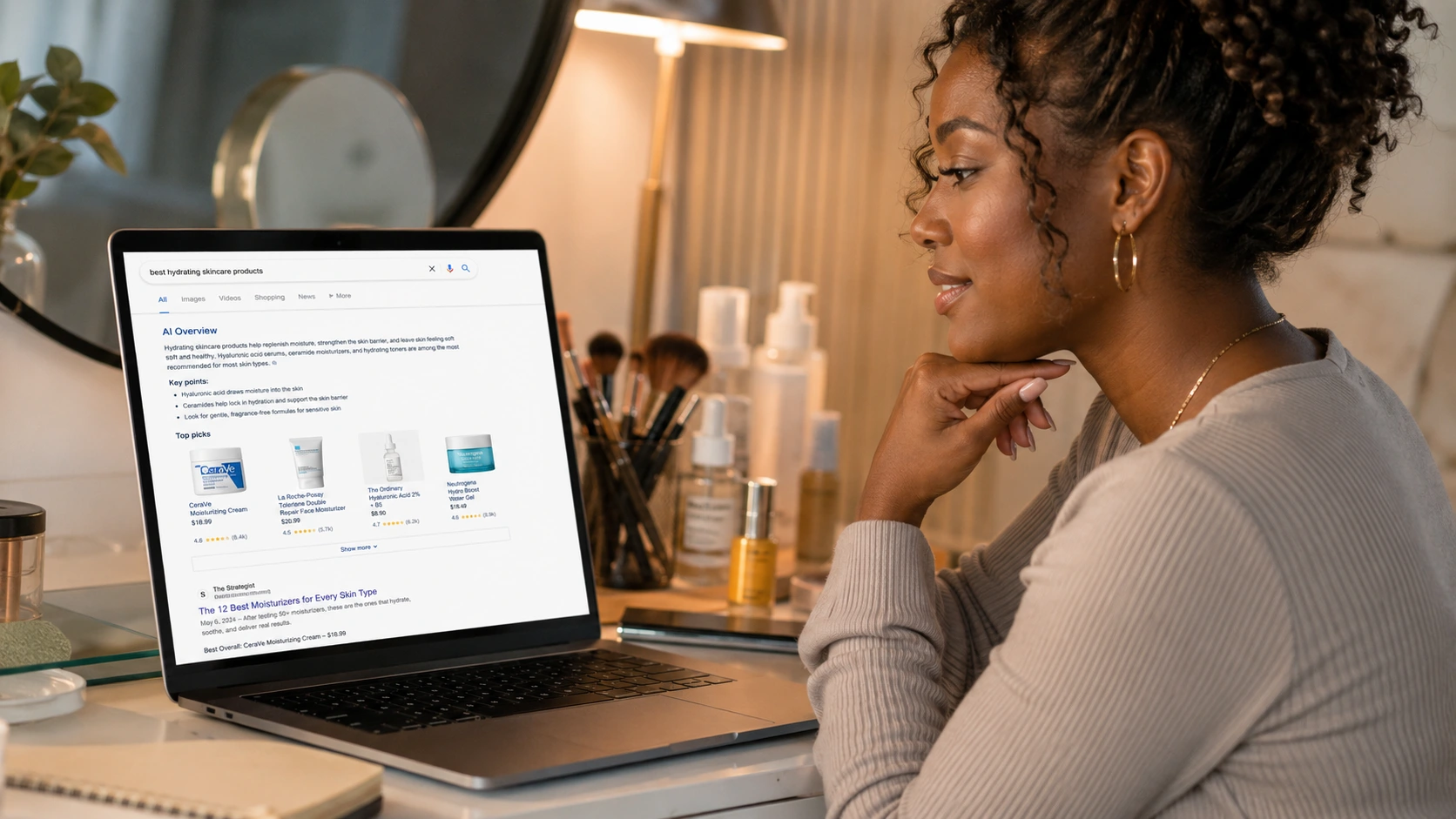
AI Overviews change everything. When an AI Overview appears on a search, the zero-click rate jumps to around 83 percent. Inside Google's newer AI Mode, the conversational interface that became available to all US users in March 2026, that figure reaches as high as 93 percent. The gap between a search with an AI Overview and one without is roughly 23 percentage points, and that gap tells you exactly where the risk is concentrated.
Intent is the great divider. Informational queries, the "what is" and "how to" searches, now see zero-click rates around 74 percent. Transactional queries, where someone is actually trying to buy something, sit much lower at around 31 percent. This is the single most important distinction for planning your content. Pure informational content is at maximum exposure to zero-click erosion, while content tied to a purchase decision is far more protected.
Mobile and desktop are different worlds. Mobile searches hit a zero-click rate around 77 percent, while desktop sits closer to 46 to 56 percent depending on the study. That is a gap of more than 30 percentage points. Since mobile now accounts for the majority of all Google searches, the aggregate number is being pulled steadily upward by mobile behavior, and any mobile-heavy site is feeling this more acutely than its raw analytics might suggest.
Niche matters enormously. AI Overviews trigger on roughly one in three technology and AI-tools queries, around 34 percent, which means a large share of informational searches in the webmaster and digital space already show an AI answer above your content. Health, business, and science niches see even higher exposure. Shopping and real estate, where Google still relies on maps, inventory, and local data that AI cannot easily summarize, see exposure as low as 3 to 6 percent.
The most common advice you will hear is "just get cited in the AI Overview instead of clicked." That advice is correct, but it comes with a hard caveat most people gloss over. According to a Pew Research Center behavioral study tracking nearly 69,000 real searches, only about 1 percent of AI Overview citation links actually get clicked. Being cited builds authority and brand exposure, but it does not reliably drive direct traffic to your site in the way a top-ten ranking used to.
So why pursue citations at all? Because the value has shifted from immediate clicks to something slower and more durable: brand familiarity. When your site is repeatedly named as the source behind AI answers, users absorb your brand as an authority on the topic. That recognition drives direct traffic and branded searches over time, the kind of visits where someone types your name into the search bar rather than finding you through a generic query. It is a longer game than click-chasing, but in a zero-click world it is increasingly the game that matters.
There is also a meaningful bright spot in the data. Brands cited inside AI Overviews earn around 35 percent more organic clicks and 91 percent more paid clicks than non-cited brands on the same query. And the clicks that do survive the zero-click filter convert better, roughly 23 percent better by some measures, because users who click after reading an AI summary are already informed and higher in intent. Fewer clicks, but better ones.
How to Actually Win in a Zero-Click World
The strategy that works in 2026 operates on a different principle than the one that worked five years ago. Instead of optimizing purely to earn the click, you optimize to earn inclusion, build brand recall, and capture the higher-intent clicks that remain. Here is how that breaks down practically.
Build a Two-Layer Content System
The most effective structure separates your content into two distinct layers with different jobs. Your authority layer is educational content built specifically to be cited, quoted, and trusted by AI systems and search engines. This is where you accept that much of the value will be brand exposure rather than direct clicks, and you optimize accordingly with clear, extractable answers. Your conversion layer is lean, focused content built to turn intent into action: product comparisons, demos, calculators, case studies with real numbers. AI systems surface explanatory content far more readily than hard-sell pages, so this conversion content stays comparatively protected from zero-click erosion while doing the revenue work.
Lead With the Answer
To get included in AI Overviews and featured snippets, structure your key pages to deliver a complete, standalone answer in the first 100 words, ideally a 40 to 60 word block that fully answers the query without requiring surrounding context. This is the passage AI systems are most likely to extract and cite. Follow that answer block with the depth, the comparison tables, the FAQs, and the nuance that gives a reader a reason to click through for more. You are serving two audiences at once: the AI that needs a clean extractable answer, and the human who needs a reason to visit.
Prioritize Content AI Cannot Easily Replace
Certain content formats naturally resist zero-click summarization, and leaning into them is one of the smartest moves available. Interactive tools and calculators require a visit to use. Personalized assessments, quizzes, and diagnostics demand engagement. Real-time data dashboards contain live information that cannot be cached into an AI summary. Original research, proprietary surveys, and benchmark data give people a reason to come to the source. If your content can be fully summarized by an AI in three sentences, it is maximally exposed. If using it requires interaction or it contains data found nowhere else, it is far safer.
Invest in Entity and Brand Signals
AI systems increasingly cite sources with strong entity signals, clear Organization schema, verifiable Author credentials, and a presence in the Knowledge Graph. With Google having dropped support for FAQ rich results in 2026, the strategic emphasis has shifted toward defining clear brand entities and author authority rather than chasing SERP feature markup. Strong, consistent entity signals help AI systems verify your credibility and increase how often you are named in answers.
Change What You Measure
Perhaps the most important shift is in your own metrics. If you are still measuring success purely by organic clicks and sessions, you are measuring a shrinking slice of your actual impact. Start tracking branded search growth, direct traffic trends, AI platform referrals (Perplexity in particular sends meaningful referral traffic because it shows sources prominently), and assisted conversions where exposure in an AI answer contributes to a sale that happens later. The brands winning in 2026 treat AI Overviews and snippets as a distribution and brand-building layer, not just a threat to their click count.
Zero-click search is not killing the open web, but it is redefining what it means to win on it. The old model, where Google provided the audience and your best content earned the click, is being replaced by a model where visibility lives inside the search experience itself and your brand can be read, referenced, and trusted without a single visit. That is genuinely harder. It is also not hopeless.
The webmasters who thrive in this environment are the ones who stop treating the click as the only unit of value, who build content designed to be both cited and clicked, who protect their revenue with conversion content AI cannot easily summarize, and who measure brand impact rather than just traffic volume. The click is drying up on informational queries. Influence, citation, and brand recall are taking its place as the currency that matters.
Adapt to that, and the zero-click era becomes an opportunity to build something more durable than a traffic stream: a brand that AI systems and human searchers both recognize as the answer.
If you want the technical playbook for getting your content cited by AI engines in the first place, the Generative Engine Optimization guide on this site covers the robots.txt configuration, content structure, and entity authority signals that determine whether ChatGPT and Perplexity name your site. And since so much of zero-click survival depends on producing citation-worthy content at a sustainable pace, the no-code content workflow automation guide walks through building a pipeline that lets you keep up without burning out. For webmasters who want to convert the brand recognition that zero-click builds into actual leads and revenue, Infinity Agent Solutions builds the conversion and lead generation systems that turn visibility into business results.