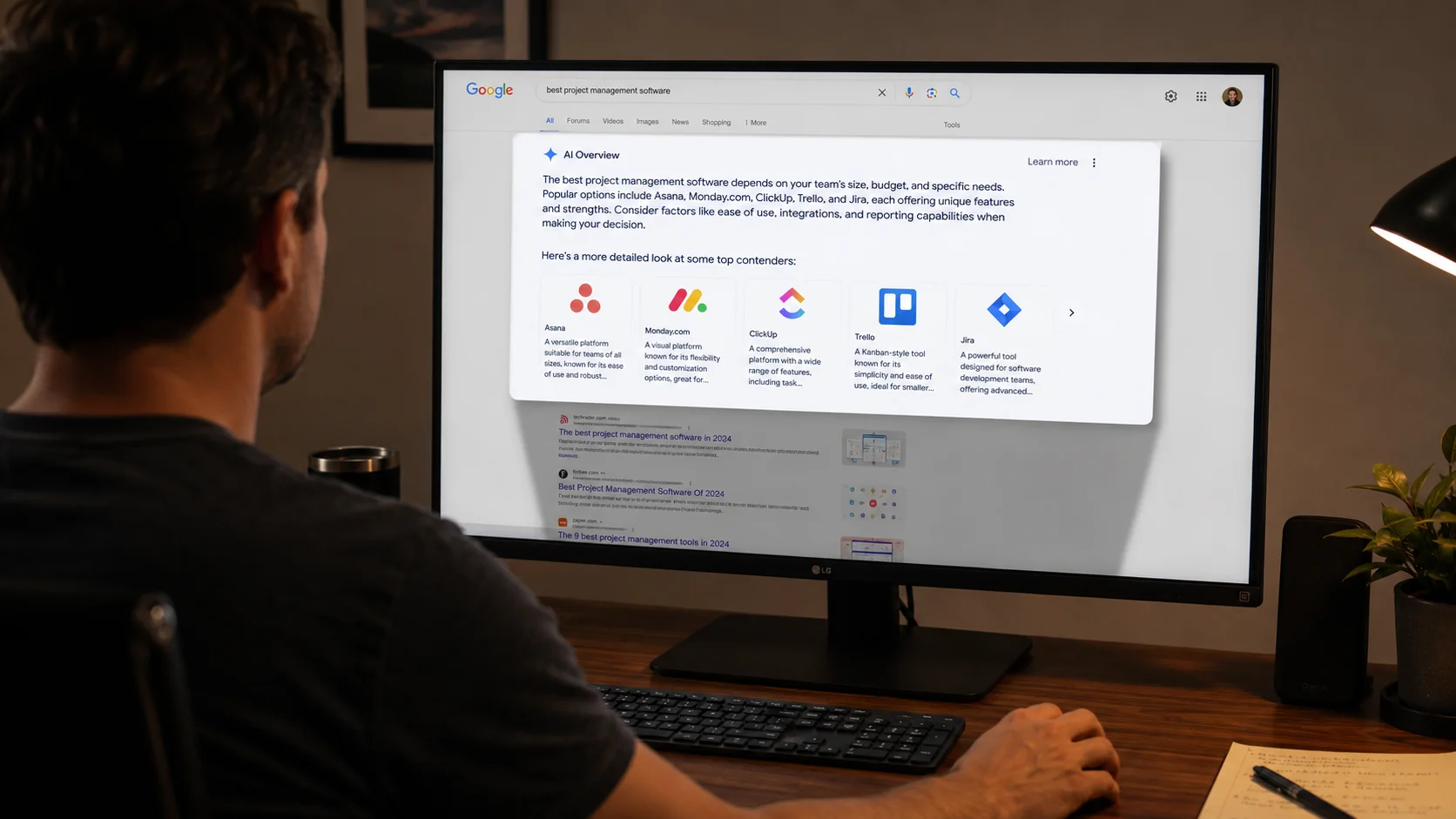
Here is the uncomfortable truth every do-it-yourself site owner should sit with this summer: your organic traffic probably did not leave. It got summarized. Somewhere between the search box and your homepage, Google started answering the question for the reader, and your carefully optimized page became a footnote in a machine-written paragraph. If your analytics have been sliding since spring and you cannot find the leak, this is almost certainly where it went.
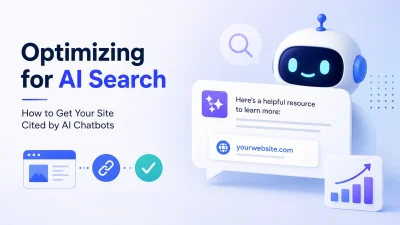
The short answer, for the busy entrepreneur who wants the takeaway before the coffee gets cold: AI Overviews are now the front door of Google, and the old game of chasing a blue-link ranking is no longer enough. You have to earn a citation inside the answer itself. That shift has a name, Answer Engine Optimization, and adapting to it is the single most valuable thing a small publisher can do in 2026.
What Actually Changed, In Numbers
This is not a vibe or a doom prediction. The data is blunt. As of January 2026, AI Overviews appear in roughly 25.8 percent of all United States searches, and the effect on clicks is severe. Ahrefs, studying 300,000 keywords, found that the click-through rate for the number-one organic result drops about 34.5 percent when an AI Overview sits above it. Pew Research Center, looking across 68,000 real queries, measured a 46.7 percent relative decline in clicks on pages that showed an AI summary. Zero-click searches, the ones that end without anyone visiting a website at all, now account for somewhere between 60 and 65 percent of activity.
If you run a niche blog, a local service site, or a lean content business, those percentages are not abstractions. They are your rent. The pages that once converted curiosity into a visit are now being intercepted. And the interception gets worse the more informational your content is: long-tail questions of seven words or more trigger an AI Overview about 65.9 percent of the time, and informational queries pull one up around 39.4 percent of the time. The stuff most DIY webmasters write, the how-to guide, the explainer, the comparison post, lives squarely in the blast radius.
The Twist: Getting Cited Is Better Than Ranking
Now the part that should put the spring back in your step. When your page is cited inside an AI Overview, the data flips in your favor. Sites quoted within the summary see roughly a 35 percent lift in click-through compared with their pre-AI performance, which actually exceeds the value of a traditional first-place ranking. The reader trusts the answer, sees your name attached to it, and clicks through to the source with intent. You stop competing for attention and start borrowing the machine's credibility.
There is a second wrinkle that rewards anyone who has built a real brand. Branded queries, searches that include your business name, gain about 18.68 percent in click-through when an AI Overview appears. Non-branded queries lose about 19.98 percent. Translation: the more people already know to look for you by name, the more the new system protects you. Obscurity is the tax. Recognition is the shield.
Answer Engine Optimization For People Without A Team
You do not need an agency retainer to respond to this. You need to change what you optimize for. The goal is no longer only to rank a page; it is to make that page the cleanest, most quotable source of a specific answer so the model reaches for you first.
Start with structure. Give every important page a direct, self-contained answer near the top, ideally a single tight paragraph that resolves the core question in plain language. Models lift passages that stand on their own. Bury your answer under 600 words of throat-clearing and you hand the citation to a competitor who got to the point. This is the same discipline that separates good writing from filler, and it now has a measurable payoff.
Next, get serious about schema markup. Adding FAQ, HowTo, and Article structured data helps a search engine understand exactly what your page answers and makes it eligible to be pulled into a summary. Most modern CMS tools and SEO plugins let you add this without touching code, which is exactly the kind of leverage a solo operator should grab. If you have wired up any automation in your publishing workflow, bake schema into the template so every new post ships with it by default.
Then, produce something the aggregators cannot: original data. Unique research, a small survey of your customers, a real teardown with your own screenshots and numbers, earns citations far more reliably than another recycled listicle. The models are drowning in restated consensus. A single honest statistic that only you have is worth more than a thousand words of paraphrase. This is also the most durable moat for a small site, because it cannot be summarized away without crediting you.
Finally, defend your transactional pages. Commercial and buying-intent queries trigger AI Overviews far less often, around 16.5 percent for transactional searches and as low as 4 percent in e-commerce. If part of your site sells or books something, that is comparatively sheltered ground. Lean into it. The informational top of your funnel may leak; the bottom, where money changes hands, still rewards a well-built page.
Measure Two Scoreboards Now, Not One
The old habit was to check your keyword rankings and call it a day. That scoreboard is now half the picture. Going forward you have to track a second one: whether and where you are being cited inside AI answers. Rankings tell you if you are eligible. Citations tell you if you are actually being seen. A page can sit at position three, invisible under a summary that never names it, and quietly bleed traffic while your rank report looks fine. Watching both is the new baseline for digital business infrastructure, and the sooner your SEO routine reflects it, the less painful the next algorithm shift will be.
None of this replaces fundamentals. Fast hosting, clean site architecture, honest internal linking, and genuinely useful writing still matter, arguably more than ever, because they are what make a page quotable in the first place. If you want a refresher on the groundwork, our earlier rundown of essential SEO practices every webmaster should know still holds up, and you can browse more of the same in our AI Tools archive. The difference in 2026 is simply the target. You are no longer writing to win a click from a list. You are writing to become the sentence the machine cannot answer without you.
The Bottom Line
AI Overviews did not kill search for small publishers. They raised the bar and moved the reward. The sites that treat every page as a quotable, well-structured, uniquely sourced answer will get pulled into the summaries and out-earn their old rankings. The sites that keep writing padded, me-too content for an audience that no longer clicks will keep watching their charts fall and wonder why. The playbook is not complicated. It is just different, and it favors exactly the kind of nimble, hands-on owner who reads a site like this one. Treat the shift as a forced upgrade to how you write, structure, and measure, and the same wave that is thinning out lazy content becomes the thing that finally makes your careful, honest work impossible for the machine to ignore.