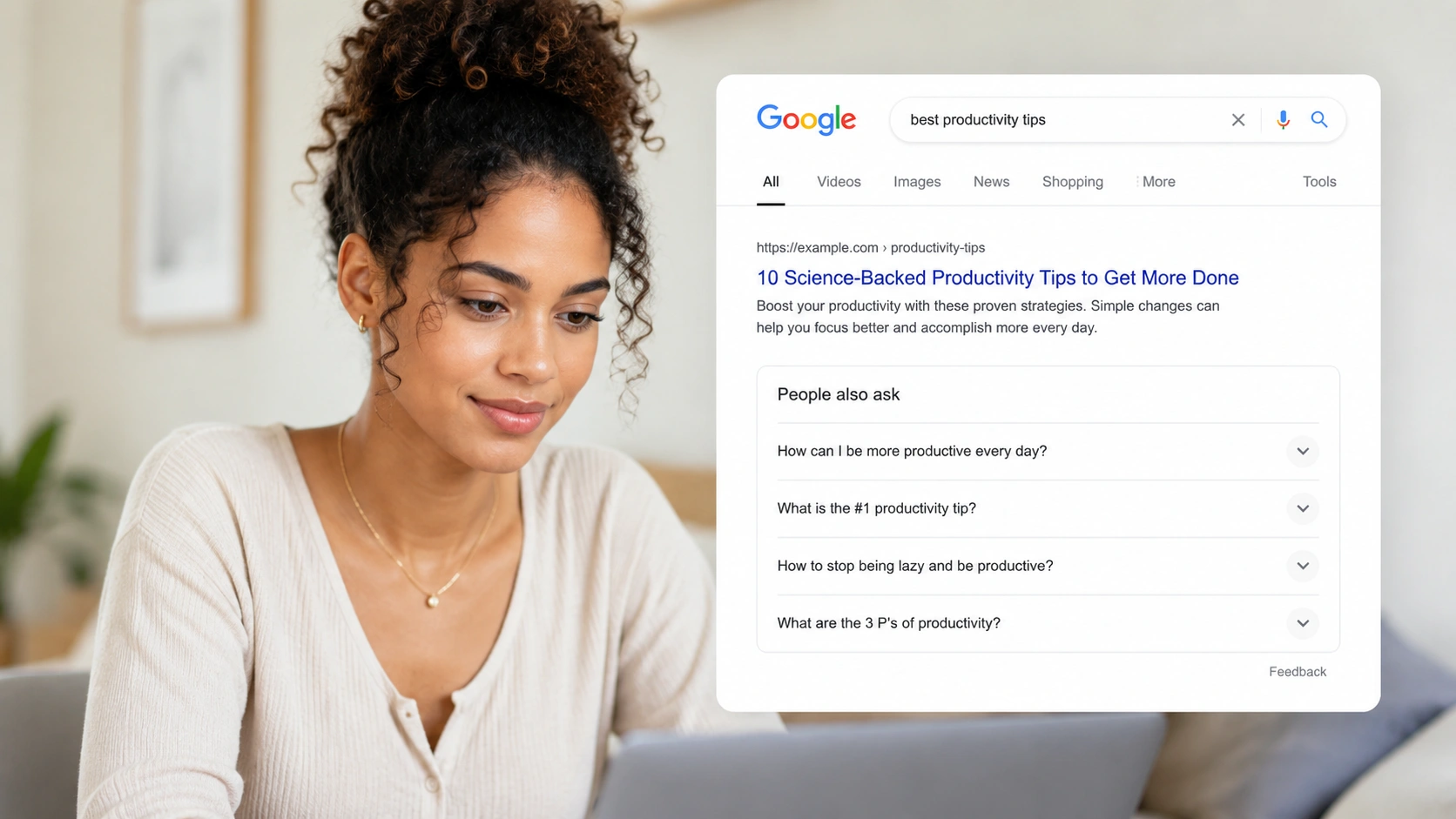
If you spent the last several years dutifully adding FAQ schema to your pages to earn those expandable question-and-answer dropdowns under your search listings, that feature is gone. On May 7, 2026, Google added a quiet deprecation notice to the top of its FAQPage developer documentation, and just like that, FAQ rich results stopped appearing in Google Search. No blog post. No explanation. No fanfare. Just a banner at the top of a documentation page confirming that a tactic which shaped content templates and schema implementations across countless sites had officially reached the end of the line.
The reaction, predictably, was louder than the change itself. Within twenty-four hours, SEO feeds filled with two competing overcorrections: "schema is dead" on one side, and "FAQ schema matters more than ever for AI" on the other. Neither is accurate. The truth sits in the less dramatic middle, and the practical action items are smaller than most of the hot takes suggest. Here is what actually happened, what it means for your site, and where to redirect the effort you used to spend chasing FAQ dropdowns.
What Actually Changed, and What Didn't
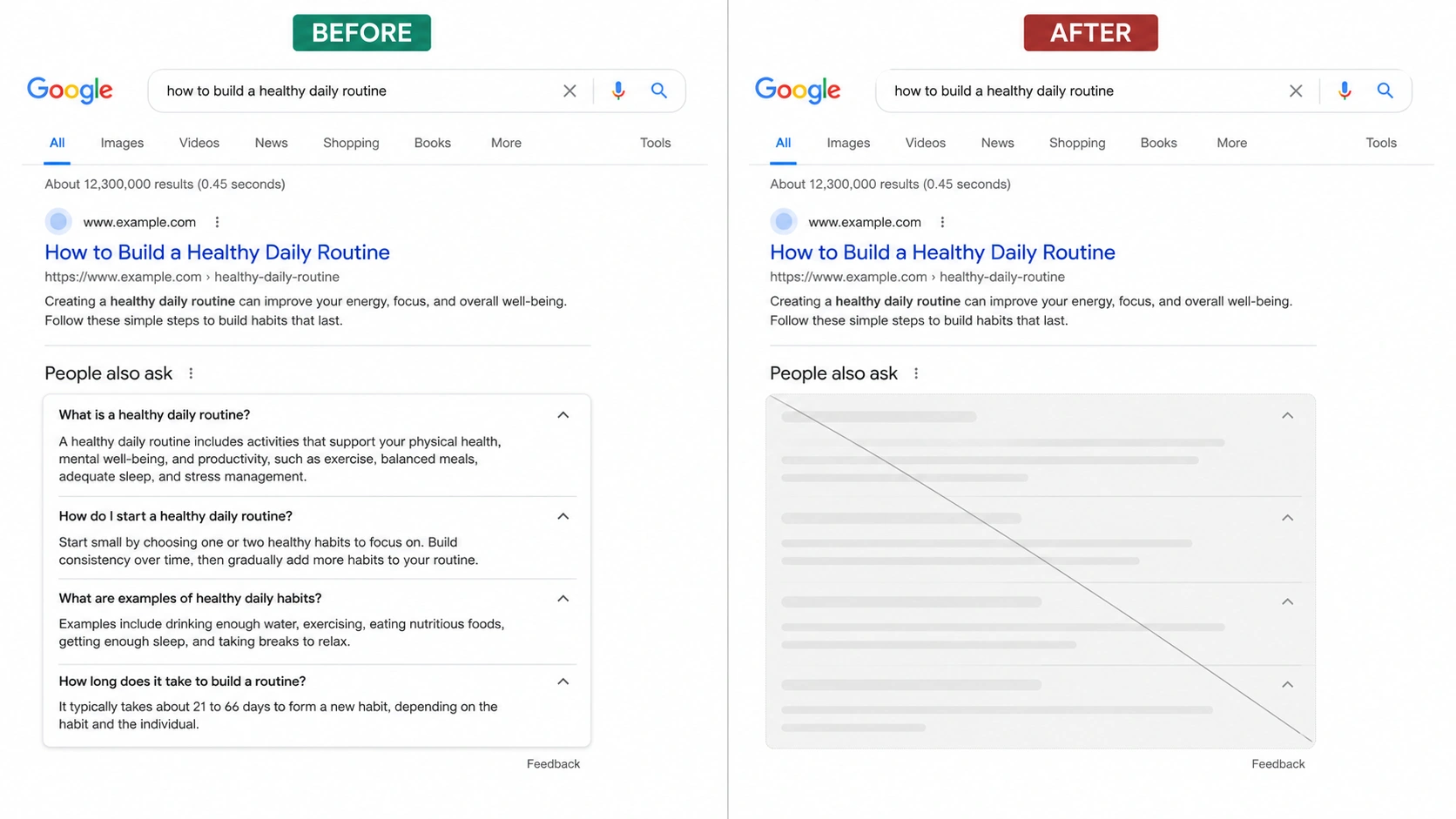
The single most important thing to understand is a distinction that has been blurred for years: FAQ schema and FAQ rich results are two different things. FAQPage schema is a piece of markup that tells search engines a chunk of content on your page is structured as questions and answers. FAQ rich results were the Google Search display feature that used that markup to render the expandable Q&A panel beneath your listing. Google retired the display feature. It did not retire the markup specification.
That means FAQPage remains a completely valid Schema.org type. Google has explicitly confirmed the markup can stay on your pages without causing any problems, and that unused structured data does not harm your search presence. What is gone is the visible SERP treatment, the part marketers actually cared about, and the reporting tools that measured it. Crucially, Google also stated that rankings are not affected by this deprecation. This is a search-appearance change, not an algorithmic one. Your positions are not being adjusted because the dropdown disappeared, though pages that previously benefited from the larger FAQ real estate may see click-through rate shifts.
The deprecation rolls out in three phases, and the dates matter if you run any kind of reporting. On May 7, 2026, the rich results stopped appearing. In June 2026, Google removes the FAQ search-appearance report and FAQ support from the Rich Results Test. And in August 2026, support for FAQ rich result data in the Search Console API disappears entirely, which means any automated dashboard or BigQuery export still pulling that data will start returning empty values. If you have pipelines depending on it, update them before the August deadline to avoid silent failures.
This Was a Slow Death, Not a Sudden One
For all the surprise in the reaction, this change closed a door that had been creaking shut for nearly three years. Back in August 2023, Google sharply restricted FAQ rich results, reserving them almost exclusively for well-known, authoritative government and health websites. For the vast majority of commercial publishers, FAQ dropdowns effectively vanished at that point. The March 2026 core update pushed impressions down even further, and by April, the feature was generating almost no visibility for almost anyone. The May 2026 announcement simply made official what had been functionally true for years, and it removed the last remaining eligibility even for those government and health sites.
This is a recognizable Google pattern, not a one-off. The company did the same thing to HowTo rich results, which were restricted to mobile and then fully deprecated on desktop in September 2023. The playbook is consistent: when a structured data feature gets aggressively scaled by SEO tooling until it stops faithfully describing the pages it sits on, Google withdraws the rich result first and leaves the markup spec in place. Google's own unofficial rationale, offered by John Mueller back in 2023, framed it as a tragedy of the commons: a genuinely useful feature rendered useless by collective overuse and abuse.
Should You Remove Your FAQ Schema? Usually Not.
Here is the question every site owner is asking this week, and the answer is more measured than the panic suggests: in most cases, do not rush to strip it out. There is no broad need for an urgent sitewide removal, and there is no evidence that valid FAQ markup becomes harmful simply because Google stopped displaying it. If the schema accurately describes visible content on your page and it is not creating maintenance headaches, leaving it in place is perfectly fine.
The markup continues to be parsed by other systems that matter. Bingbot, whose index feeds ChatGPT search and Microsoft Copilot grounding, still reads it. PerplexityBot reads it. Voice-assistant indexers and the broader ecosystem of retrieval crawlers still process the structured question-and-answer pairs. So while FAQPage schema is no longer a Google SERP lever, it has not become dead weight either. For pages whose entire purpose is question-and-answer content, the schema is not a layer bolted on top of the content, it simply is the content, and you should keep it.
Where removal does make sense is the cleanup case. If you have orphaned markup describing FAQ sections that no longer exist, thin or duplicate questions copy-pasted across dozens of pages purely to game SERP pixels, or schema that no longer matches your visible content, that is worth pruning. The governing principle going forward is simple: keep structured data when it honestly describes real, useful, visible content, and remove it when it exists only to chase a rich result that Google no longer shows. This is a schema hygiene exercise, not a strategic emergency.
The Uncomfortable Lesson Underneath
Strip away the tactical details and this deprecation exposes something worth sitting with: the schema was never doing the real work. The content always was. For years, the FAQ dropdown reward encouraged publishers to treat markup as a shortcut to more search real estate, and that incentive quietly excused a lot of weak, filler FAQ sections that existed only for the pixels. Now that the cosmetic cover is gone, the content has to stand on its own merits.
That is actually a useful forcing function. It is worth asking honestly of every FAQ section you maintain: are these the questions your audience actually asks, or generic placeholders written to fill a template? Does each answer get to the point in the first sentence, or bury it in setup? Are the questions phrased in the language real people use, or in marketing-speak? Are you covering the questions genuinely surfacing in People Also Ask, autocomplete, and Reddit threads for your topic? If those answers feel shaky, that FAQ section was underperforming even when rich results were live. The deprecation just removed its disguise.
Where to Redirect the Effort Now
The energy you used to spend engineering FAQ schema for SERP display is better invested in signals that actually drive visibility in 2026. The first and most durable is genuinely useful, answer-first content. A well-structured FAQ section remains one of the most efficient ways to cover the long tail of search intent for a topic, because each question functions as its own micro-cluster of keywords. That value is entirely independent of whether Google ever renders a dropdown. Write the questions your readers really have, answer them clearly and immediately, and you capture intent regardless of display features.
This connects directly to AI search visibility, which is where much of the future opportunity sits. An Ahrefs study from February 2026 found that only 38 percent of pages cited in Google AI Overviews rank in the traditional top ten, meaning the signals that earn AI citations are not always the same ones that earn conventional rankings. Clear, direct, question-led content is among the strongest of those citation signals. But here is the nuance the AI-hype crowd gets wrong: AI systems do not privilege FAQPage schema when deciding what to cite. They pull from clean question-and-answer content whether or not the markup is present. The active ingredient, again, is the content itself, not the wrapper around it.
The second place to invest is entity and brand signals. With one more piece of schema-based SERP decoration now retired, the durable advantages increasingly come from clear Organization schema, verifiable author credentials, and a well-defined presence in Google's Knowledge Graph. These signals help search engines and AI systems confirm who you are and why your content should be trusted, and they are far harder for competitors to fake than a block of FAQ markup. Structured data still matters, but its honest job is to describe your content and your entity accurately, not to manufacture visual real estate.
The through-line across all of this is a principle that outlasts any single feature: durable search performance does not depend on any one display treatment Google offers or removes. Use structured data to describe genuinely useful content, invest in the answer-first clarity that both humans and AI systems reward, and build the entity authority that no algorithm update can quietly deprecate out from under you.
If you want the deeper playbook on earning those AI citations that increasingly matter more than traditional SERP features, the guide to getting your site cited by AI chatbots on this site walks through the exact content structure and technical signals that get you referenced by ChatGPT and Perplexity. And since this whole shift is downstream of the collapse in referral clicks, understanding how the zero-click search era is reshaping visibility gives you the strategic frame for why entity signals and answer-first content now outperform schema decoration. For webmasters who want help turning that hard-won visibility into actual leads and revenue, Infinity Agent Solutions builds the conversion systems that make search authority pay off.